Impackt
Publishing
Writer:
Emily Carr / An Coppens
Paperback:
170 / 54
Link to
the books page:
http://www.packtpub.com/practical-change-management-it-projects/book
http://www.packtpub.com/attracting-it-graduates-to-your-business/book
http://www.packtpub.com/practical-change-management-it-projects/book
http://www.packtpub.com/attracting-it-graduates-to-your-business/book


My rating: 5/5
Learn to properly manage the changes that occur on an IT project,
directly affects project success.
In this
book the main roles
involved in such projects, which is the best way and
when they relate to each, and a set of templates
that will be very useful to
collect all the process are
discussed.
In
addition to the 20 templates
offered us fill in
any project to adequately adapt to changes in IT
projects, presents an example that allows us to go through the book very enjoyable
and secure.
This book
is aimed primarily at IT Project
Managers but also can provide guidance to HR staff.
* Chapter 1: What is Change Management?
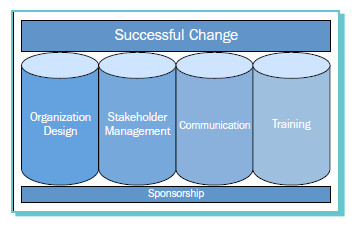
In this chapter the concept of "Change Management" is introduced and briefly explains the pillars that we should try to have a successful change process. These concepts are discussed in later chapters.
Curiously,
according to a study by IBM Global Business Services 2008 called Making Change
Work, only 41% of IT projects fully meets its goals.

The main points to cover in each of the pillars of change are:

* Chapter
2: Establishing the Framework for Change
There are several frameworks to manage the changes: “See- Feel- Change”
y “Rider, Elephant, Patch”.
-
The Rider: This is the intellectual side of people and is responsible
for maintaining their will power.
-
The Elephant: This is the emotional side of
people.
-
The Path: This is the process people have to follow to make the
change.
They
remind us that although the rider might seem to be in charge and does in fact, hold
the reins, the rider is very small and weak compared to the elephant they are
trying to control. A person's intellectual side may provide the will power to
adopt a change in the short term, but unless they are emotionally driven to make
the change as well, they will eventually go back to the old way of doing
things.
* Chapter
3: Building Sponsorship for the Change
In this chapter we will see how to compose our project team. Normally include: Steering committee, executive sponsors, change agents and super-users.
In this chapter we will see how to compose our project team. Normally include: Steering committee, executive sponsors, change agents and super-users.

The book explores the role of
each in the project, the
importance of each and the
activities involved.
* Chapter
4: Managing your Stakeholders
A stakeholder is a user or group that is impacted by the change. There are usually 3 categories: sponsors, end users and project team.
A stakeholder is a user or group that is impacted by the change. There are usually 3 categories: sponsors, end users and project team.
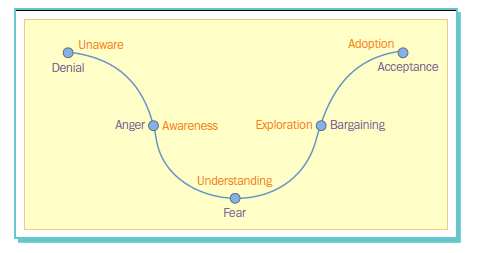
Once the members of these categories are identified, we must establish mechanisms of measurement. Normally, these are
join to human feelings.
* Chapter
5: Communicating the Change
Here the author teaches us to avoid the way we communicate in one direction.
Here the author teaches us to avoid the way we communicate in one direction.

Depending
on the status of the project and involved members
explains what is the best way and timing to
do so.

* Chapter
6: Using Training to Prepare Your Stakeholders
This chapter is essential because any change requires adaptation on staff and therefore this training.
This chapter is essential because any change requires adaptation on staff and therefore this training.
There are
different methods of training available. We should have a plan
to training time, resources and materials.

* Chapter
7: Ready, Set, Change
This final chapter lists the templates that have completed and summing up the tips for each chapter.
This final chapter lists the templates that have completed and summing up the tips for each chapter.

To conclude this review I would like to recommend this
great book. In my opinion, the most important is all the templates this book
cover. You may find theory in some other books but in the real world you need
to know how to deal a real situation on your company. Step by step you have the
answers here.
All my greetings to the author, awesome job.
Besides, I propose a good way to mix this book. If we have the best people we will have the triumph. I propose another Impackt book, next one: Attracting IT Graduates to Your Business. This book is aimed at hiring managers and recruiters.
To sum up, the main chapters, are the next:
* Chapter 1: What Do IT Graduates Want?
We have a new group of workers. They have been using mobile phones, laptops, tablet devices, Facebook, Twitter, YouTube, and LinkedIn since their teens.A person who works as human resources need to know how to deal it and how to adapt the internal practices.
* Chapter 2: Be Clear on What Your Organization Has to Offer
The question is "what makes your organization unique?" You have to know better than nobody how is your company (formal/informal clothes, traditional vs innovative, fun vs serious...)., salary you will pay, benefits if you work here (restaurants, gyms, beauty salons...), training and so on.
* Chapter 3: Creativity Rules in Gaining Graduate Interest
Careers page like this one http://careers.microsoft.com
let us show the people that work in our company and the roles we are looking for. Social media like LinkedIn, Facebook or Twitter also are a good place to organize games or competition to attract candidates.
* Chapter 4: Getting to "You're Hired"
Telephone calls, skills testing, interviews..different stages we may manage and we must learn.